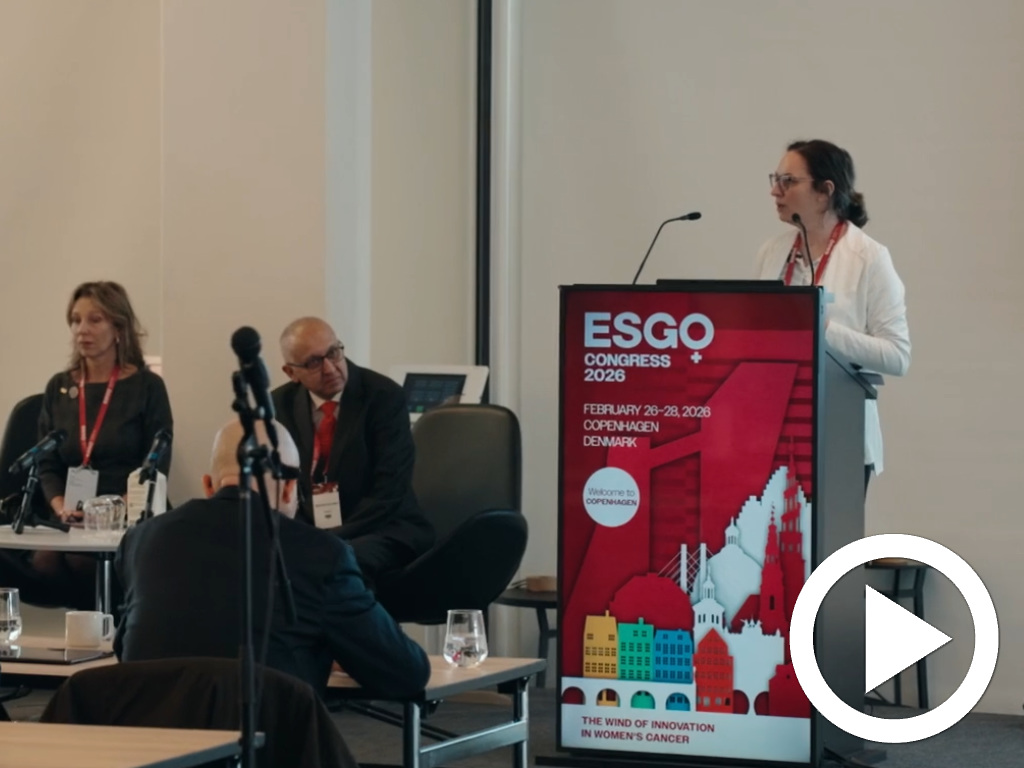
Held alongside the 2026 European Congress on Gynaecological Oncology, the ESGO Legacy event convened leading experts, policymakers, patient advocates and industry representatives in Copenhagen to advance sustainable improvements in women’s cancer care. “Imagine a Europe where your address no longer determines your survival,” outgoing ESGO Vice-President Associate Professor Maja Pakiz said as she opened the session.
The Legacy initiative, organised by the European Society of Gynaecological Oncology (ESGO) and this year supported by Wonderful Copenhagen, was designed to create a lasting impact in each congress host country. This year’s twohour, invite-only session focused on centralisation of care, timely access to novel therapies, and data-driven policymaking. While international experts shared best practices from across Europe, equal emphasis was placed on understanding and learning from Denmark’s healthcare model, fostering a dynamic and mutually beneficial exchange.
“The Congress in Copenhagen is an excellent platform that can bring together patient voices, professionals, and policymakers”
Elevating the Patient Voice
The patient perspective set the tone for the session. Lise Dons (Denmark) and Kim Hulscher (Netherlands), outgoing Co-Chair of the European Network of Gynaecological Cancer Advocacy Groups (ENGAGe), shared their personal experiences of cancer care. They talked about how important it was for them stay with their family and access medical services in the one place. “Centralised care is essential for quality of care,” shared Ms Hulscher. Ms Dons emphasised timely access to novel drugs and the importance of oncologists taking a human approach. Their perspectives reinforced the principle that any policy reform must translate into tangible improvements in patient experience and outcomes.
Centralisation of Care: Denmark as a Model
Professor Claus Høgdall presented Denmark’s success story, demonstrating how the centralisation of care in Denmark correlated with a significant reduction in the country’s ovarian cancer mortality rate between 2002 and 2023. “The Danish example shows us that the centralised treatment of advanced stages of ovarian cancer improves survival,” said Professor Høgdall. The Danish model was shared as a scalable framework for other European healthcare systems seeking to reduce disparities in outcomes, aligning closely with ESGO’s call to action to establish a Network of Centres of Excellence for Women’s Health in the European Union (EU).
Equal and Timely Access to Innovation
Professor Jalid Sehouli, ESGO President, outlined the German approach to the timely implementation of novel oncological therapies, highlighting the speed between approval to access. “This is something I want to bring to the rest of Europe in my ESGO Presidency. We must end the inequity in cancer care,” said Professor Sehouli. Danish policy and industry perspectives were provided by Søren Gaard of the Danish Medicines Council and Thomas Senderovitz of the Danish Association of the Pharmaceutical Industry. Their contributions underscored the importance of collaboration and sustainable financing for novel treatments to make the EU a leader again in life sciences.
From Dialogue to Implementation
This year’s Legacy initiative identified policy and system-level measures needed to further strengthen equitable, timely, and comprehensive access to high-quality cancer care for women in Denmark and across the EU. Attendees will meet again to reassess progress in relation to centralisation of care and ESGO’s Network of Centres of Excellence for Women’s Health – which are designed to reduce fragmentation across Europe. The ESGO Legacy initiative will continue in 2027 in London, United Kingdom, alongside the next ESGO Congress.

View / download Copenhagen Legacy Lab’s publications and find inspirational tools to support your legacy process here
About the European Society of Gynaecological Oncology
The European Society of Gynaecological Oncology (ESGO) is a not-for-profit association established in 1983. Since its formation, ESGO has developed a strong infrastructure of 3000+ members and a network of early-career doctors, patient advocacy groups, centres of excellence and a variety of research groups across Europe and globally. ESGO’s aim is to improve the health and well-being of women with gynaecological cancers through advocacy, prevention, research, excellence in care and education.
Further Learning:
Event website: ESGO 2026 Congress
Copenhagen Legacy Lab: Cases from Congresses