
Business Events advocacy veteran Rod Cameron eloquently sets out the arguments why our sector shouldn’t let the “overtourism crisis” go to waste. Business, professional and scientific events need to be clearly differentiated from leisure tourism, when communicating with the public as well as with policymakers, and now is the perfect time to do this:
There are many forces at work today impacting previously established global travel patterns, from changing and often intimidating new national entry requirements to shifting economic conditions and enhanced security concerns.
But one that is having major new impacts in many parts of the world is a growing backlash against tourism in general coming from local residents. This has taken many forms, from subtle to highly militant, but the driving force behind it wherever it appears is a sense amongst local residents that growing and sometimes already excessive levels of visitors are having negative impacts on their community and daily lives. While initially limited to a few particularly hard-hit destinations, it has grown steadily as more people in other communities found themselves relating to the concerns being expressed, which suggests it not about to abate any time soon.
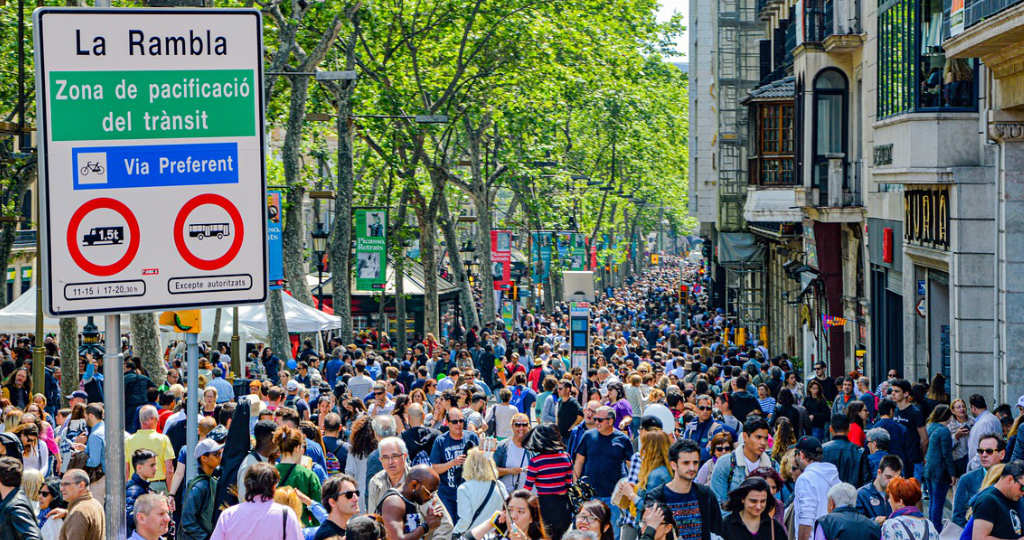
Crowds fill Barcelona’s famous La Rambla — a symbol of the city’s tourism boom that has also sparked local anti-tourism protests in recent years
The irony is that many of the destinations with the most aggressive reactions in this regard are those that are at the same time heavily dependent on the revenues tourism creates – thus creating a political dilemma of the first order: how do you satisfy local concerns without damaging an important part of the economy – including valuable tax revenues – in the process?
An obvious question for the business events industry is the extent to which event delegates may suffer the same fate as other visitors – or if, in fact, this is already happening; delegates are visibly using many of the same facilities and amenities as others coming into a destination.
But a better question is: could this be the greatest single opportunity the industry will ever see to advance business events as an attractive alternative to other visitors – and one worthy of selective investment by besieged governments?
Consider the paradoxical dilemma faced by local administrations: attempting to placate local audiences (read: voters) while maintaining an economic sector that generates the revenues that deliver many of the benefits those same groups enjoy. Not an easy choice, but one that we are as an industry uniquely able to assist with. The reason is that the most logical solution is to high-grade visitors by selectively pursuing those groups that deliver the best return – in other words, that generate the greatest benefits and least negative impacts per visitor. And that, by definition, are our clients and their delegates
The starting point in using this to advantage is to distinguish amongst various groups in ways that policy makers can understand. That means considering the key driving forces in the backlash, some of which are:
- Visitor impacts on housing options / costs for locals
- Negative impacts on local amenities and ambiance that are valued by locals
- Bad behavior by those indulging in “holiday mode”, particularly in local residential neighborhoods
- A sense that the economic returns don’t justify these disruptions
So what do events and their delegates selectively offer in this context? Let’s start with the last point:
First, as many economic studies have shown, delegates offer a far greater EI impact than most other visitor groups – certainly compared with the budget travelers looking to save as much money as possible on a trip. This is because they tend themselves to be better funded – often on expenses – but at the same time are inducing additional spending associated with staging and managing the event and its related programming.
Secondly, delegates are generally less likely to be indulging in the kind of behavior most repellant to locals – disrespecting local community values in favor of personal indulgence – because pleasure is not the primary reason for their visit. In fact many organizations holding events today are not only primarily pursuing business and professional goals but actually have specific event objectives relating to leaving positive legacies and sharing knowledge with local audiences.
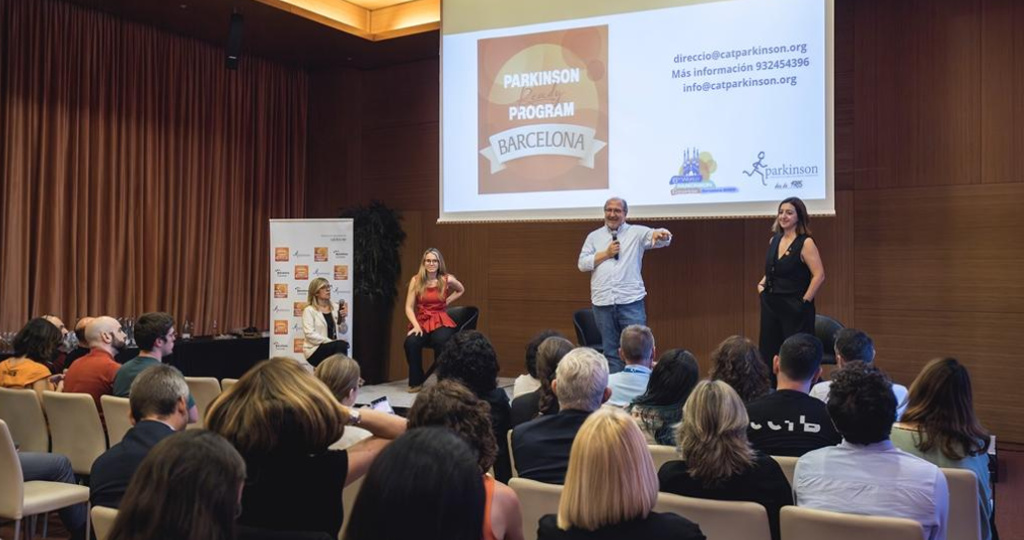
When Barcelona hosted Parkinson World Congress 2023, local service providers received specialised training through the Parkinson Ready Program, making the city more inclusive and welcoming for people with disabilities
Third, with specific reference to the housing displacement issue, delegates are more likely to be using formal visitor accommodation in recognized tourism zones as opposed to ad hoc accommodation in local neighborhoods, simply because this is often part of a package and at the same time proximity to event venues is a benefit most delegates want to access.
And finally, they are often – and demonstrably – leaving a net benefit in the community in the form of the knowledge transfer, professional development, networking enhancement and recruiting opportunities that are the primary outcomes of the event. This is where destinations have an even greater opportunity to benefit by selectively pursuing events that align with their broader economic and social priorities.
Some governments have already recognized that “high grading” visitors by prioritizing visits by those who are most economically beneficial and least behaviorally disruptive – but this is an objective that’s not always easy to put into practice. However putting a priority on business events provides a clear path toward this end as the mechanisms for their encouragement are both well established and easily communicable to governments.
It’s a compelling story and one that offers a logical solution to what can appear to be an intractable problem – in other words, just what governments need to set intelligent policy in the face of contradictory forces. The problem, of course, is the one that has faced our industry forever: governments are unlikely to reach this conclusion on their own, and our record of effectively communicating much of anything to them is not encouraging.
But providing a solution to a growing political challenge is the perfect opportunity to revisit the industry / government conversation – and the moment to do that is now.
Let’s hope we can use this window of opportunity to full advantage – there’s no way of knowing how long it may be open!
Rod Cameron
President, Criterion Communications